• Link to Facebook
  • Link to LinkedIn
  • Link to Instagram
admin@cci-grc.ca | Box 5, Guelph, ON N1H 6J6
  • Shopping Cart Shopping Cart
    0Shopping Cart
CCI GRAND RIVER
  • Home
  • About
    • About CCI GRC
    • Board of Directors & Staff
    • Committees
    • Governance
  • Membership
    • Join Now
    • RONA PRIVILEGE PROGRAM
    • Individual Member
    • Condo Corporation
    • Business Partner
    • Professional
  • Events
    • Events
    • Refund Policies
  • Sponsors
    • Our Sponsors
    • Become a Sponsor
  • Online Directory
    • Downloadable Directory
  • The Grand River View
  • CCI National
    • CCI Resources
    • Other CCI Chapters
  • Condos-Unplugged
  • Menu Menu
Education, Information, Awareness, Canadian Condominium Institute, Southwestern Ontario, Condo owners, Golf Tournament, conference 2022

Unit Owners’ Responsibility for their Occupants:

September 17, 2023/in Uncategorized

December 2021, York C.C. No 188 v. Caudhry, et al, 2021 ONSC 7027; & York Region C.C. No. 794 v. Watson, et al, 2021 ONSC 6574


Incessant and harassing emails, phone calls, and intimidating and threatening behaviour are all too common for condominium boards and property managers. In York C.C. No. 188 v. Chaudhry, et al, and York Region C.C. No. 794 v. Watson, et al, the Courts dealt with situations where this type of behaviour needed to be addressed and determined that these actions amounted to “dangerous activities” under section 117 of the Condominium Act, 1998 (the “Act’).

Facts

In both cases the units were occupied by the owners’ adult children. The boards and property managers were bombarded by emails, voicemails, faxes. and confronted personally by the occupants, including threats of physical violence. The occupants relentlessly accused the boards and property managers of racism, plotting criminal activities, fraud, and other false conduct. This was considered intimidating, harassing, and threatening by the condominiums.

The owners/parents of the occupants received multiple notices from the condominiums, counsel, and the police, regarding the conduct of the occupants. Despite this, the owners did not take appropriate steps to curtail the behaviour and even appeared to further the campaign. The respective condominiums were required to commence compliance applications in Court, seeking orders to curtail this egregious behaviour.

The Courts’ Findings

The Courts noted that condominiums are required to take all reasonable steps to ensure that that the owners and occupiers comply with the Act, including preventing harassing conduct. The Courts also found that incessant harassing correspondence amounted to dangerous activities, as the behaviour of the occupants was likely to cause injury to an individual. “Injury”, can include, “psychological harm that is beyond a trifling nature.” This type of behaviour, specifically when directed at a property manager, may also trigger the Occupation Health and Safety Act, as property managers are entitled to a safe and harassment-free work environment. The conduct of the occupants in the present cases is a clear example of such.

The Courts ordered the occupants to vacate the units and cease all communications with the condominiums and their property managers. Such a remedy is powerful and reserved only for the most serious of instances.

Regarding the owners, the Courts noted that section 119(2) of the Act provides that the owners themselves are responsible for taking all reasonable steps to ensure that their occupants comply. Neither owner took reasonable steps to ensure this, if any at all.  As a result significant costs were awarded to the condominiums and were added to the common expenses payable for the owners’ units.

Bottom Line

Where an owner/occupant will not stop harassing and intimidating others, including incessant and threatening correspondence, the Courts have determined such is a dangerous activity, and condominiums have remedies available to them. This kind of unwarranted behaviour can amount to “psychological harm” and includes inflammatory and harassing emails and phone calls.

For those unit owners who own units occupied by problematic, and even dangerous occupants, these cases highlight the positive obligation on owners to assist in curtailing the behaviour. Failure to take appropriate and reasonable actions may lead to significant cost consequences. Unit owners cannot simply allow their unit to be occupied by others and wash their hands of any responsibility.

Are you facing a similar situation? Contact your condominium legal team today.


Christopher Mendes, Associate, B.A. (Hons), M.A., J.D.
www.svplaw.ca
*This article does not constitute legal advice, always consult legal counsel.


https://cci-grc.ca/wp-content/uploads/2023/09/Blog-Titles-CCI.png 300 750 adminCCI https://cci-grc.ca/wp-content/uploads/2023/09/CCI-Full-Logo-Grand-River-31ae3da81a2928943167b28ecdb52b1f-300x103.jpg adminCCI2023-09-17 18:47:412023-09-17 18:47:41Unit Owners’ Responsibility for their Occupants:

Students in Condominiums: Parking, Noise and Garbage Oh My!

September 17, 2023/in Uncategorized
CCI. CCI Grand River. Students in Condominiums. Student Housing. Sara Hicks. MF Property. Condo Tips. Canadian Condominium Institute. Grand River. Back to School.

Ah, September in Ontario. The nights begin to cool, the school buses are back on the roads, the condo visitor parking lot is full of unauthorized cars…

It is that time of year again! Students return and for condominiums with many student rentals, it can be a difficult period to navigate. The fall season does not have to be about the fall of order and rules in your complex, so keep reading on to find out more ways to handle “student season”.

Disorderly Students: Sweeping assumption?

Some condominiums have a high rate of student rentals, and with that can come a whole lot of headaches for residents as well as property managers. However, most of these students are not problems themselves; I was a student once and it is easy to be blissfully unaware of restrictions, especially when you are visiting a friend at their place (or milling around a house party). It comes down to the personality of the renter, not necessarily their age. Many are hard-working, independent, quiet, and often looking for a nice, safe, and accessible place to live. Do not assume off the bat that they have come to wreak havoc on your peaceful community. Sometimes owners are more difficult to deal with, so treat each issue on a case-by-case basis. I will pose a few concerns and offer some potential solutions, so you can go back to dreaming about the changing leaves and pumpkin spice lattes (or your other cozy drink of choice).

Resident Information

If you are renting out your unit, you must provide the management company (or board of directors, if there is no property manager) with your tenant’s information within 10 days of entering the lease. In a building, this can be a bit easier as the manager can obtain this when the resident asks for their names to be added to the buzzer, or they request a new fob, or rental of the party room. It can be much more difficult in a townhome, as there are not as many things to hold in exchange for their names and contact information. Perhaps it is a visitor parking pass, or when they reach out to you about a maintenance issue, but we ask directors and residents to be patient as we inquire about the new people in the corner unit. We are not asking because we are nosy; we are supposed to have this information!

Parking

CCI. CCI Grand River. Students in Condominiums. Student Housing. Sara Hicks. MF Property. Condo Tips. Canadian Condominium Institute. Grand River. Back to School.

If your condo has visitor parking, it is common for there to be rules surrounding the spaces, such as a rule that indicates that residents cannot park there at any time. If that rule exists, then it is ideal to have a system to enforce it, such as hiring a parking control monitoring company to write tickets to offenders or having a designated person onsite contact a company to ticket. Sometimes tickets are the only effective way to ensure action after reminders have been issued. If you are looking to rent your unit, please be sure to communicate the parking situation to potential renters. Do not tell them, for example, that they can park in visitors if that is against the rules, otherwise you may have your tenants sending parking tickets your way.

As property managers, we do not enjoy telling new residents that there is nowhere for their second vehicle (or third). If you will be having guests use parking, make sure you understand the process of parking in visitors, if it be displaying a pass or calling in to register your vehicle to avoid a ticket.

Noise

Students can get a bad rap; they are not all partiers who set up lawn chairs and beer pong on the front lawns and blast their music into the wee hours. However, these situations sometimes unfold anyways, especially when guests of theirs with little regard for your sleep schedule come onsite. Sometimes these incidents are one-offs and neighbours put up with it. Other times, it becomes a trend, and something must be done. In a townhome, the primary option is calling the police (not 911 for noise please) or City bylaw, depending on where you live. They will either be issued a notice or fine, and noise infraction tickets should certainly deter the party units (eventually they cut into your coffee or beer budget). In a building, sometimes the superintendent can investigate but they should bring matters such as these to the property manager afterwards. Managers can contact the owner and advise them that their tenants must abide by the condo rules and bylaws regarding noise. Neighbours have the right to the peaceful enjoyment of their homes.

Garbage and Tidiness

CCI. CCI Grand River. Students in Condominiums. Student Housing. Sara Hicks. MF Property. Condo Tips. Canadian Condominium Institute. Grand River. Back to School.

Some students are extremely neat and orderly, and things tend to go more smoothly when a parent owns the unit they are in, or someone else is checking in. Other times, porches are littered with junk, windows are lined with liquor bottles (otherwise known as trophies to some), windows or balconies may have a flag or a seasonal item that is way past its season. For many students, this is their first time away from home and they just don’t think about how these things look to an outsider. The mess is often unintentional and without malice. However, it will irk the residents who put time and care into their property, and several disheveled units can quickly give a property an unkept look. If you are a landlord, it is required for you to provide your tenants with the condo documents which often indicate the rules on window coverings, porch or balcony décor, waste storage, etc. It is also prudent that you or your unit manager check on the unit more than once a year to ensure it is in good shape. It is not the role of the property manager to do weekly checks on units and send constant reminders.

Final Tips

If you manage a building or complex with many student rentals, it is not a bad idea to distribute the rules/policies regularly, either on your electronic notice board or via a community website.

Sometimes an insert is included in the status certificate package summarizing the aspects that greatly impact tenants.

Some condos update their rules to be very specific to assist with enforcement (timelines to remove Christmas lights, what can be kept on porches, etc.).

Try to work with the owner of a problematic tenant before calling legal, as it is important to take steps to resolve the matter first.

The manager does not typically enter units so it is prudent to have someone check items that may be disregarded such as furnace filters, window A/C units, water softeners, shut-off valves, smoke detectors, bathtubs, toilets, etc.

CCI. CCI Grand River. Students in Condominiums. Student Housing. Sara Hicks. MF Property. Condo Tips. Canadian Condominium Institute. Grand River. Back to School.

Sara Hicks, B.A.,(H.), OLCM, RCM, LCCI
Vice-President , Shareholder, MF Property Management
www.mfproperty.com

https://cci-grc.ca/wp-content/uploads/2023/09/Blog-Titles-CCI-33.png 300 750 adminCCI https://cci-grc.ca/wp-content/uploads/2023/09/CCI-Full-Logo-Grand-River-31ae3da81a2928943167b28ecdb52b1f-300x103.jpg adminCCI2023-09-17 18:36:072023-09-17 18:37:06Students in Condominiums: Parking, Noise and Garbage Oh My!

UPDATE: Expiry Date – Temporary Online Meeting Provisions

September 17, 2023/in Uncategorized
CCI Grand River. Grand River Chapter. Canadian Condominium Institute. Virtual Meeting Legislation. Temporary online meeting provisions.

If your condominium corporation has benefited from the temporary legislation that made it possible to hold all meetings virtually, then there is a deadline you should be made aware of. 

By September 30th, 2022, the temporary legislative provisions that permitted corporations governed under the following are set to expire: 

  • Business Corporations Act (OBCA), 
  • Corporations Act (CA), 
  • Not-for-Profit Corporations Act, 2010 (ONCA), 
  • Co-operative Corporations Act (CCA) and 
  • Condominium Act, 1998 (Condo Act)
CCI Grand River. Grand River Chapter. Canadian Condominium Institute. Virtual Meeting Legislation. Temporary online meeting provisions.

The Ministry of Government and Consumer Services (ONCONDO) is working on extending these provisions and will be updating the condominium community in the coming weeks. 

Many of us have benefited from this legislation; from saving commuting times, to being generally more accessible. Condominium community members are standing by for an update on whether or not this will be extended. 

How can you stay up to date? Ensure you are subscribed to a trusted condominium community news source, like CCI Grand River Chapter. Meanwhile, know that your voice matters, and share your thoughts when you can. 

*UPDATE: The Government of Ontario extended the effective period of the temporary legislative provisions permitting condominium corporations to call and hold meetings virtually (as applicable and with certain restrictions and requirements, as discussed in our September 1, 2022 blog). The NEW EXPIRY DATE for these provisions which permit virtual meetings is September 30, 2023.

Conference Sponsorship, annual conference, annual golf tournament, Grand River Chapter, Canadian Condominium Institute, Become a Member | CCI-GRC

Maggie Matian
Marketing Manager for CCI Grand River Chapter

https://cci-grc.ca/wp-content/uploads/2023/09/Blog-Titles-CCI-32.png 300 750 adminCCI https://cci-grc.ca/wp-content/uploads/2023/09/CCI-Full-Logo-Grand-River-31ae3da81a2928943167b28ecdb52b1f-300x103.jpg adminCCI2023-09-17 18:35:302023-09-17 18:36:00UPDATE: Expiry Date – Temporary Online Meeting Provisions

The Changes of Construction Costs In Your Condominium

September 17, 2023/in Uncategorized

From food prices to gas prices, mortgage rates to rental rates, there isn’t a sector on this big blue rock that hasn’t been affected by the recent rise in inflation.

One place in the condominium industry that couldn’t be more true is construction cost.

CCI GRC. CCI Grand River. CWB. Ryan Griffiths. Reserve Funds. Construction Costs. Reevaluating costs.

What we’ve seen across the country are many condo corporations facing higher than anticipated costs for major repair and replacement projects. The current environment of higher prices for materials and labour not only affects the cost of major repairs and replacements in the near term, but this also affects budgeting for future construction costs in your Reserve Fund Study (“RFS”) funding plan.

Condo corporations that are tendering major projects today are typically seeing bids ranging from 25% to 100% higher than what was planned in their RFS. The cost for certain types of projects (roofing and windows for example) have increased in price more than others. What really matters to a condo corporation is how much a contractor is going to charge to do the same project a few years ago compared to what they charge today. Unless you’ve actually tendered the same project at 2 different times, this is impossible to know, but the best benchmark I have found is the Statistics Canada Residential Building Construction Price Index. Based on this index, the cost of residential building construction across Canada (based on results from eleven (11) major metropolitan areas) has increased by an average of 36% over a 2-year period from 2020 to 2022. The increase for construction prices in Toronto (the closest and most relevant to Grand River) was 44% over the same 2-year period. While this appears staggering, based on my recent experience, this is reflective of the reality of current construction costs.

What does this mean for a condo corporation?

Condo boards need to be more diligent than ever in evaluating their funding plan for near-term major work together with their long-term reserve funding plan. From a near-term perspective, once a condo board receives pricing for a major reserve fund project, the first check and balance is to compare the cost and timing to what is budgeted in the reserve fund study. A significant discrepancy in either the cost or timing can create a funding shortfall. Even if the corporation has enough funds in the Reserve Fund to cover the cost of the current project, depleting the fund for an early, unplanned, or over budget expense may leave the corporation short for another near-term project.

From a long-term perspective, condo boards should not underestimate the impact that higher construction costs are going to have on their RFS plan. The impact of a significant increase in the cost of all the future planned work can be dramatic. In very simple terms, if the cost of the planned work in the future has increased by 44%, shouldn’t a corporation expect to increase the amount they contribute to the reserve fund by 44%?

CCI GRC. CCI Grand River. CWB. Ryan Griffiths. Reserve Funds. Construction Costs. Reevaluating costs.

The reality in the current environment is that there is likely going to be a shortfall (compared to the original RFS budget) for condominium corporations completing major projects in the near-term, and there is going to be pressure to increase reserve fund contributions to save adequately for other projects over the long-term. Condo boards faced with current funding challenges are encouraged to update their RFS, even if it isn’t due for several years, in order to get the best grasp on the financial needs of the corporation.

I have a few recommendations for a board faced with a shortfall in the current environment:

1.     Take the time to evaluate all your funding options. The right solution could be an increase in condo fees, a special assessment, a loan to the condo corporation, or some combination of those solutions. There are experienced reserve fund planners and lenders that can help you evaluate those options.

2.     Communicate with your owners early and often. If you expect an issue may be on the horizon, tell your owners, and tell them what due diligence is being completed to find solutions or options. Keep the owners updated as you obtain more information and share whatever you can so that the process is as transparent as possible.

3.     Engage the owners and empower them to be part of the solution. Condo boards considering a loan as a possible solution are often providing a loan as one potential option for homeowners. A borrowing bylaw can be presented to the owners as a choice between a loan or another alternative plan. Consider weighing out the pros and cons of multiple options and let the owners choose the best funding plan for the community.

Ryan Griffiths
Director, Condominium Finance
www.cwbmaxium.com

https://cci-grc.ca/wp-content/uploads/2023/09/Blog-Titles-CCI-31.png 300 750 adminCCI https://cci-grc.ca/wp-content/uploads/2023/09/CCI-Full-Logo-Grand-River-31ae3da81a2928943167b28ecdb52b1f-300x103.jpg adminCCI2023-09-17 18:34:312023-09-17 18:35:26The Changes of Construction Costs In Your Condominium

What does being a CCI Grand River Chapter member mean?

September 17, 2023/in Uncategorized

When you’re new to any industry, looking at the networking and membership options can be daunting. Where do you start? What resources are available to you? 

Grand River. Grand River Chapter. CCI Grand River. Canadian Condominium Institute. Memberships.

This uncertainty may also apply to new condominium unit owners. Purchasing a condominium means investing in a community. New and recent condominium owners may not fully understand the ownership structure they’ve bought into, and may feel a little lost when it comes to navigating the different situations they find themselves in. 

Whether financial, circumstantial, or understanding the legal framework of your condominium, there is a network with resources out there to support you and make your life a little easier: the Canadian Condominium Institute.

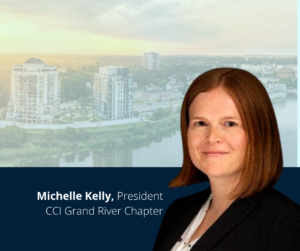
To sum it up better, read the below message from the current president of our Chapter, Michelle Kelly, on how she feels about the impact of CCI Grand River Chapter. 

Michelle Kelly. Robson Carpenter. President of Grand River Chapter. CCI. Canadian Condominium Institute. Lawyer.

“CCI is a great way to stay current on the hot topics and issues faced by condominiums. The opportunity to speak with directors and owners and hear their perspectives is unparalleled. The blog and podcast are great quick hits with the educational events providing a more detailed discussion of the issues. The social events, like the golf tournament, are a great way to stay connected with other professionals serving condominiums in the area.” 

One of the greatest benefits of owning a condominium, is the community. By joining a Canadian Condominium Institute chapter in your area, you’ll have access to industry experts, education, and support directly from your community. 

Grand River. Grand River Chapter. CCI Grand River. Canadian Condominium Institute. Memberships.

You don’t have to figure it all out on your own. Join your Canadian Condominium Institute chapter today, and unlock your condo experience potential. Being a member means joining a trusted community of experts to help steer in the right direction.

Visit our website today for more details.

Conference Sponsorship, annual conference, annual golf tournament, Grand River Chapter, Canadian Condominium Institute, Become a Member | CCI-GRC

Maggie Matian
Marketing Manager for CCI Grand River Chapter

https://cci-grc.ca/wp-content/uploads/2023/09/Blog-Titles-CCI-30.png 300 750 adminCCI https://cci-grc.ca/wp-content/uploads/2023/09/CCI-Full-Logo-Grand-River-31ae3da81a2928943167b28ecdb52b1f-300x103.jpg adminCCI2023-09-17 18:33:392023-09-17 18:34:25What does being a CCI Grand River Chapter member mean?

When it Moves, it Moves Fast – Condo Talk

September 17, 2023/in Uncategorized
Canadian Condominium Institute. CCI GRC. CCI Grand River. Grand River Condos. Condo News. Condo Updates. Property managers. Condo managers. Virtual Meetings. Electronic voting. By-law changes

Do you have a virtual meeting and electronic voting by-law? 

If the answer is no, then make sure to read “September 30, 2022 Deadline-Virtual Meetings and E-Voting” by Denise Lash. 

This article will give you insight into how to prepare for this potential change in your condominium. 

https://cci-grc.ca/wp-content/uploads/2023/09/Blog-Titles-CCI-29.png 300 750 adminCCI https://cci-grc.ca/wp-content/uploads/2023/09/CCI-Full-Logo-Grand-River-31ae3da81a2928943167b28ecdb52b1f-300x103.jpg adminCCI2023-09-17 18:32:562023-09-17 18:33:34When it Moves, it Moves Fast – Condo Talk

Hit the Road

September 17, 2023/in Uncategorized
CCI Grand River. Henry Jansen. Criterium Jansen Engineers. Potholes. Pothole repair.

It’s mid-summer with the grass burning as we experience another drought, so what’s the rush in reminding the Board it needs to be making paving decisions, now? The reason of course is the Board missed the fall deadline for the asphalt plant’s closing last November and had distractions this spring not allowing early action this year. 

The pot holes, sunken manhole covers, and expanding pavement cracks will not heal themselves. Before the property manager calls the paving contractor(s) it is best to remember the methods of repairs.

  1. Throw ‘n Roll: This is a temporary pot hole repair where liquid asphalt fills a hole and is then rolled over with heavy equipment to compact it.
  2. Semi-permanent repair: This is similar to the Throw ‘n Roll except it is more deliberate with the hole properly cleaned and the hole trimmed to sound pavement. The asphalt is then compacted using a vibratory roller or plate.
  3. Spray-injection method: This repair uses special equipment to spray a tack coat of asphalt into a cleaned hole and then blowing asphalt and aggregate into the hole. This method does not require compaction.
  4. Full-depth roadway replacement: This method rebuilds the pavement by pulverizing the old asphalt and mixing it with cement and water to form a base for a final asphalt surface. This method of course is the most expensive but the best.
  5. Infrared repair:  This method uses equipment emitting infrared heating to melt the damaged surface and remove defects with new asphalt on the surface. Patches become seamless with less chance of future potholes. This method is often more cost effective than large patch jobs.

So let us start with the basics. Asphalt pavement is also called bituminous concrete. It is called ‘concrete’ because like cement-based concrete, bituminous concrete has a mineral aggregate of stone and sand. This aggregate is held together with a binder of petroleum derivative asphalt. Different soil conditions (i.e. sandy subsurface vs. clay) will warrant a different mix of asphalt paving but this will be addressed by whoever creates your bid documents and specifications. For planning purposes, your Board should assume paving will last about 20 years.

For purposes of discussions we will assume existing asphalt paved roads, parking areas, and/or driveways. Typically, roadways have a sub-base of 100 to 200 mm (4 to 8 inches) of a well-drained, compacted soil and gravel mix. The first layer of paving is called the binder course and it is 38 to 50 mm (1 ½ to 2 inches) thick. This is covered by a topping coat of 38 mm (1 ½ inches).

If it were not for the sun and water, asphalt paving would last a long time, but paving begins to deteriorate as soon as water begins to penetrate into the binder course and the UV rays removes asphalt from the topping coat. This can happen in less than five years. This is why adding a sealing coat in the first 2 to 5 years is sometimes recommended. It is also an area of confusion. 

CCI Grand River. Henry Jansen. Criterium Jansen Engineers. Potholes. Pothole repair.

Sealing coat materials do not add back the asphalt lost due to UV deterioration. It only protects the pavement for a period of time from further deterioration such as shrinkage cracks and reveling (loss of surface aggregate). It does not bridge large cracks or fill in roadway depressions.

When water begins to infiltrate the pavement here in Canada the freeze / thaw cycle takes its toll. The small cracks become larger in the binder course and eventually the sub-base begins to fail. At this point surface cracks, settlement, alligatoring, and other surface visible signs make an appearance. Your Maintenance Plan should immediately address these problems by having crack filling as a yearly project. The cracks should be filled with standard joint filler to within 3 to 6 mm (1/8 to ¼ inch) of the top of the crack. Similarly, surface depressions and sink areas should be annually addressed as well.

After fifteen years, major paving projects might present themselves. Sometimes a major re-surfacing project can be delayed with judicious removal of large areas of deterioration and repairing the sub-base followed by a 38 mm (1 ½ inch) binder with a 38 mm (1 ½ inch) top coat. If the roadway or parking area deterioration is judged to be wide spread, the options include a reclamation project where the top 150 to 300 mm (6 to 12 inches) of pavement and sub-base is ground into a recycled material that can be reused for a compacted and graded foundation for a new paving surface. This minimizes trucking and labor costs and extra materials costs. So if have not done anything with your paving, it may be time to hit the road.

Henry J. Jansen, P.Eng., ACCI
President, Criterium-Jansen Engineers
http://www.criterium-jansen.com

Presenters, the Canadian Condominium Institute and its representatives will not be held liable in any respect whatsoever for any statement or advice presented herein. These presentations should not be relied upon as a professional opinion or as an authoritative or comprehensive answer in any case. Professional advice should be obtained after discussing all particulars applicable in the specific circumstances to obtain an opinion or report capable of absolving condominium directors from liability [under s. 37 (3) (b) of the Condominium Act, 1998]. Presenters’ views expressed are not necessarily those of the Canadian Condominium Institute.

https://cci-grc.ca/wp-content/uploads/2023/09/Blog-Titles-CCI-28.png 300 750 adminCCI https://cci-grc.ca/wp-content/uploads/2023/09/CCI-Full-Logo-Grand-River-31ae3da81a2928943167b28ecdb52b1f-300x103.jpg adminCCI2023-09-17 18:32:372023-09-17 18:32:53Hit the Road

Condominium Pets vs. The CAT

September 17, 2023/in Uncategorized
CCI Grand River. Chris Mendes. CAT. Canadian Condominium institute. Legal. SV Law.

June 2022

Teno v. Essex C.C. No. 28, 2022 ONCAT 43

Introduction

May 2022 was a busy month in the Condominium Authority Tribunal (“CAT”). As our readers will know, the CAT has exclusive jurisdiction to resolve disputes between owners and condominium corporations with respect to the provisions of the declaration, by-laws and rules relating to pets/animals. In Teno v. Essex Condominium Corporation No. 28, 2022 ONCAT 43, the CAT provides guidance to condominiums and property managers on how a condominium can migrate towards compliance in the face of historical nonenforcement.

Facts

In Teno, the condominium’s declaration contained a blanket prohibition on all animals within the condominium. As our readers may remember from our previous article, https://www.svlaw.ca/condominium-law/insights/details/decisions-from-the-cat-human-rights-pet-prohibitions, prohibitions on animals contained in a declaration are not required to be reasonable, and exceptions are rare.

That said, despite this prohibition, it was not enforced for three (3) decades, specifically with respect to the condominium permitting cats. When the condominium began receiving requests for dogs from owners, the condominium reviewed and determined to bring itself into compliance with the prohibition contained in the declaration.

To move towards compliance, in light of the history of non-enforcement, the condominium enacted rules permitting existing cats to be kept, provided the cats were confined to the units, and until the animals passed away. During this time, no new animals would be permitted and once the “legacy cats” passed away, they were not permitted to be replaced. Given decisions from Ontario’s Superior Court of Justice that past massive non-enforcement may bar the condominium’s efforts to enforce the prohibition against existing cat owners in the present, the passage of transition/ “legacy” rules offered the best avenue to achieve future compliance. An owner challenged the “legacy” rule on the basis that such was contrary to the prohibition in the declaration and therefore invalid.

Under the Condominium Act, 1998 (the “Act”), condominiums may pass reasonable rules, however those rules must be consistent with the declaration. Boards must also take all reasonable steps to ensure compliance with a declaration. In its analysis, the CAT found that while there was past nonenforcement, the condominium acknowledged this, and the passage of the “Legacy” rules represented the condominium’s efforts to move towards compliance, while balancing the rights of existing pet owners. Provided the condominium was moving to compliance with its declaration’s prohibition on animals, such a transitional rule was reasonable and valid.

Bottom Line

Balancing the interests of all owners, including ensuring compliance with a condominium’s governing documents can be a challenging task. Such a task can be made even more difficult where certain provisions of a declaration or rule have gone unenforced in the past or have been applied inconsistently. However, previous nonenforcement may not be a complete bar to future enforcement. Provided a condominium recognizes its obligations to its governing documents, and acknowledges past nonenforcement, future compliance can be achieved by migrating, in a clear, fair, and consistent manner, to enforcing its declaration, by-laws and rules over time.

Written by Christopher Mendes, edited by Robert Mullin. *This article does not constitute legal advice, always consult legal counsel.

Education, Information, Awareness, Canadian Condominium Institute, Southwestern Ontario, Condo owners, Golf Tournament, conference 2022 | CCI-GRC

Christopher Mendes, B.A. (Hons.), M.A., J.D.
Lawyer, SV Law
www.svlaw.ca

MVP Properties.
https://cci-grc.ca/wp-content/uploads/2023/09/Blog-Titles-CCI-25.png 300 750 adminCCI https://cci-grc.ca/wp-content/uploads/2023/09/CCI-Full-Logo-Grand-River-31ae3da81a2928943167b28ecdb52b1f-300x103.jpg adminCCI2023-09-17 18:32:282023-09-17 18:32:33Condominium Pets vs. The CAT

The Effects of Inflation on Your Reserve Funds

September 17, 2023/in Uncategorized
CCi Grand River. Canadian Condominium institute. Inflation. Engineers. Reserve funds. Budgets. RJC. Grand River Chapter.

Almost all Canadians are experiencing the pinch of inflation, from gas to our grocery bills. Beyond its more visible day-to-day effects, inflation can have a significant impact on condominium budgets and on the overall health of your reserve fund.

Boards, property managers and engineers are grappling with the need to maintain condominium buildings, while minimizing cost increases that many residents cannot afford. While the consumer price index has increased by 7.7% over the past year[i], residential construction prices increased 22.6% year over year in the first quarter of 2022, with the largest increases in Calgary (+31.4%), Edmonton (+26.6%) and Toronto (+26.5%)[ii].

These are huge cost increases, so what can be done? Unfortunately, no one has a perfect solution but there are a few options to mitigate the impacts of construction inflation that can be considered:

CCi Grand River. Canadian Condominium institute. Inflation. Engineers. Reserve funds. Budgets. RJC. Grand River Chapter.

1.     Undertake an updated engineering study before you start your capital repair project. Do not rely on your reserve fund pricing from 1-2 years ago as being accurate.

2.     Your engineer or contractor may be able to come up with practical solutions for material substitution to reduce costs, achieve energy savings, or phase work to spread out the costs. Ask for their input as soon as possible.

3.     Make your contractor’s life easier. By making site storage, transport, and other site impacts easier, it may reduce their labour or overhead costs, which can be passed on to your corporation.

4.     Award work as soon as possible after pricing is received. When asking for pricing, do not expect contractors or suppliers to hold pricing over 30 days.

5.     Be flexible, some price increases appear to be accelerating, while others may be temporary. Recent decreases in lumber prices are an example that price increases may not be permanent.

Inflation has profoundly affected the condominium industry. Although there is no way to eliminate its influence on your condominium, we can work together to reduce risks and plan accordingly.    

–         Jeffrey Stevens EIT and Jordan Swail P.Eng.

[i] https://www.bankofcanada.ca/rates/price-indexes/cpi/

[ii] https://www150.statcan.gc.ca/n1/daily-quotidien/220505/dq220505b-eng.htm

Jeffrey Stevens. Jordan Swail. RJC Engineers.

Jeffrey Stevens EIT and Jordan Swail P.Eng.
RJC Engineers
www.rjc.ca

https://cci-grc.ca/wp-content/uploads/2023/09/Blog-Titles-CCI-24.png 300 750 adminCCI https://cci-grc.ca/wp-content/uploads/2023/09/CCI-Full-Logo-Grand-River-31ae3da81a2928943167b28ecdb52b1f-300x103.jpg adminCCI2023-09-17 18:31:372023-09-17 18:32:17The Effects of Inflation on Your Reserve Funds

Board of Directors – From Interest to Election

September 17, 2023/in Uncategorized

Purchasing a unit inside a condominium means investing in a community. Part of that community investment involves regular communication with the condominium’s Board of Directors. 

CCI grand river. Board of directors. Choosing your board. Condominiums. Condo buildings. Board elections. Unit owners. Condo managers.

A condominium’s Board of Directors is elected by the owners. The Board of Directors is responsible for handling a condominium corporation’s affairs. Because of this, it’s important for you to stay informed about the events surrounding your condo, vote, or become a director yourself. 

However, the above may be difficult if one does not understand the role of the director, so we have outlined that for you! 

Roles and responsibilities.

What are the affairs that your condominium board tackles on a daily basis? Well, that can depend. However, to run in compliance with the Condominium Act, 1998 (the Condo Act), as part of their responsibilities, directors meet regularly to discuss the following: 

  • Tracking your condominium’s financial performance;
  • Ensuring all required maintenance and repairs are carried out;
  • Hiring specialists (like engineers) to update the reserve fund study every three years;
  • Making or amending condominium by-laws;
  • Enacting rules to promote the safety, security, and welfare of all owners; and
  • Providing regular communication with the other owners.
CCI grand river. Board of directors. Choosing your board. Condominiums. Condo buildings. Board elections. Unit owners. Condo managers.

It is only during the scheduled directors’ meetings that any business can be conducted. There must also be a quorum at the meeting. This means that there must be a majority at the directors’ meeting. 

These meetings are typically once a month, but can be more or less frequent depending on the board. For those of us with tight schedules, luckily, director meetings don’t need to be face-to-face. Many boards choose to have teleconferences to ensure most can attend. 

Qualifications of a director.

In order to be elected as a director, you must meet the following qualifications:

CCI grand river. Board of directors. Choosing your board. Condominiums. Condo buildings. Board elections. Unit owners. Condo managers.
  • Be at least 18 years of age;
  • Not be bankrupt;
  • Not have been found incapable of managing property within the meaning of the Substitute Decisions Act or the Mental Health Act;
  • Be an individual;
  • Not been found to be incapable by any court in Canada or elsewhere, subject to the Condo Act’s regulations; and
  • Have complied with the required disclosure obligations.

Take note that a condominium corporation’s by-laws may impose additional qualifications for candidates seeking election. An example of this would be that you must be an owner of a unit in the condominium corporation where you are running for election as an director. 

Electing people to the Board of Directors. 

If a director’s term is expiring, a replacement director will be elected at the next owners’ meeting. This means residents can run for a seat on the condominium corporation’s board. 

CCI grand river. Board of directors. Choosing your board. Condominiums. Condo buildings. Board elections. Unit owners. Condo managers.

Each condominium has its own by-laws and rules, so the process for electing directors will vary. 

If you know ahead of time that you are interested in running for a position on the board, you should notify your board before your AGM. Doing this will mean that your name is included in the AGM package that is sent to all residents before the meeting. However, you can still stand for election the day of the meeting.

This gives you a chance to introduce yourself at the AGM where residents will be voting.

When residents are voting for a new director, there will be a variety of considerations including: 

  • The information you have about the candidates (that introduction may come in handy!);
  • Speaking with the candidates directly; and,
  • Discussing candidates with your neighbours.

Serving on the Board of Directors is no easy feat, and can be time-consuming. It’s important to understand the role of your directors when communicating so that you have a realistic expectation of what can be done. 

And if you’re interested in helping be a part of the positive change in your condominium community; keep in touch with your area’s CCI chapter for information, resources, and support. 

Mandatory disclosure from the CAO: 

Effective November 1, 2017, directors of condominium corporations, as well as candidates for director positions, must make certain disclosures. Once a person is elected to a board, he or she is subject to ongoing disclosure requirements for the duration of the term. Failure to meet these requirements will immediately disqualify someone from being a director.

Maggie Matian
Marketing Manager for CCI Grand River

https://cci-grc.ca/wp-content/uploads/2023/09/Blog-Titles-CCI-23.png 450 1125 adminCCI https://cci-grc.ca/wp-content/uploads/2023/09/CCI-Full-Logo-Grand-River-31ae3da81a2928943167b28ecdb52b1f-300x103.jpg adminCCI2023-09-17 18:30:472023-09-17 18:31:27Board of Directors – From Interest to Election
Page 3 of 8‹12345›»

Categories

  • Educational
  • News
  • Uncategorized

Archives

  • June 2025
  • May 2025
  • April 2025
  • March 2025
  • February 2025
  • January 2025
  • December 2024
  • November 2024
  • October 2024
  • September 2024
  • August 2024
  • July 2024
  • June 2024
  • May 2024
  • April 2024
  • March 2024
  • February 2024
  • January 2024
  • December 2023
  • November 2023
  • October 2023
  • September 2023
  • April 2023
  • September 2022
  • June 2022
  • May 2022
  • April 2022
  • March 2022
  • February 2022
  • January 2022

CONTACT CCI GRC

The Canadian Condominium Institute is an independent, non-profit organization formed in 1982.

  • Box 5, Guelph, ON N1H 6J6
  • 226-314-1955
  • admin@cci-grc.ca

Website design by: Theresa Place Media Inc. 

Website Sponsors


© Copyright - CCI GRC
  • Link to Facebook
  • Link to LinkedIn
  • Link to Instagram
  • Privacy Policy
Scroll to top Scroll to top Scroll to top