Around this time of year, many condominium owners, directors, and managers ask us: why are my windows dripping with water? Condensation is a common issue for older condominium windows and even some new windows. Here are some tips to better deal with condensation:
Open your blinds or curtains. Having them closed can reduce the temperature of your window frames and increase the potential for condensation. Opening your window coverings will allow warm interior air to reach them, raising your window frame temperature and drying the condensation.
Use your fans. The relative humidity in your unit may be too high for your windows. Using bathroom and kitchen fans more often can bring in fresh dry air and reduce the potential for window condensation.
Lower your humidifier settings. Most windows can only tolerate about 20% relative humidity when we reach cold January/February temperatures. Consider lowering relative humidity to 30% when temperatures drop below 0C, and 20% when temperatures drop below -10C.
Ensure your operable windows are fully closed. Leaving them slightly open can lower the window frame temperature enough to cause condensation.
If your problem still persists, feel free to reach out to your engineering consultant to ask for further tips on dealing with condensation. They should be able to provide you with standard tips and comment on the condensation performance of your window systems.
Every window system has a different condensation rating (i.e. ability to resist condensation) and new windows with higher ratings generally come at a cost premium. When it does come time to replace your windows, speak to your engineer about your expectations and your budget. New windows are a long-term investment and condensation resistance is not something to overlook when making your big decision.
As condominium managers, we have all been there – your relationship with a condominium community comes to an end. This can happen for any number of reasons – financial difficulties, personality conflicts, board unrest or lack of trust, to name a few – but no matter the reason, you will find yourself in the position of having to hand over a (preferably neat and organized) package of information to the incoming management company.
On the flip side, you may be the incoming condominium manager who is taking over a contract. Do you know what to ask for in advance? What to ask for at the deadline? How do you make the transition as seamless as possible for the residents?
As per the Condominium Management Services Act, 2015 (CMSA), all relevant documents and records must be transferred to the condominium 15 days after the date of termination, with a few exceptions. Of course, it is reasonable to request/hand over some documentation in advance of the turnover date (registered documents, for example), and in this digital age, it’s quick and easy to pass along copies via email.
Aside from handing over documents, there are dozens of tiny practical details to consider, such as banking (keeping former accounts or opening new ones?), address for service (make sure this is updated!), the status of PO’s (work completed vs. work in progress), etc. Each firm will have its own processes for these, but generally, remember to stick to the following:
1. COMMUNICATION – As soon as you know you are either terminating or taking over a contract, designate a point of contact to handle the transition. The point of contact may be anyone in your office – if they are prepared to amicably discuss the details of the transition and keep an open dialogue with the other party.
2. CHECKLISTS – There are just too many items to remember, so eliminate some of the stress and put it all in a list. Checking off items one by one will help you keep track and ensure that nothing is missed.
3. COOPERATION – It is imperative that both companies (and the Board) work together to ensure the least amount of disruption to residents, no matter the circumstances. Cooperation will set up the board, and therefore the community, for success.
4. PATIENCE – There are many moving parts to transitions and often residual items to wrap up, even months later. This is not necessarily anyone’s ‘fault’, but it’s important to remember that these things take time. Don’t expect the transition to be wrapped up by Day 1 – it’s a marathon, not a sprint.
Even when you follow these guidelines, you will likely run into a situation at some point where things are not progressing as smoothly as you would like. Maybe pertinent documents are being withheld, or maybe false information is being passed along. These types of issues can stem from the other management company, the owners, or even the board. In these situations, it’s important to remain professional and to carry on in the best interests of the community.
If despite your best efforts, you have reached a roadblock (perhaps you have been unsuccessful in obtaining documents, or there are financial red flags), you may need to involve the corporation’s lawyer and/or the Condominium Management Regulatory Authority of Ontario (CMRAO). This is the last resort, but a necessary step to protect the Board of Directors and condominium corporation.
The Grand River condominium community is a small one. While we all strive for fulfilling and long-lasting relationships with our clients, it is not always possible. We have all experienced both ends of a transition and know how difficult they can be – so the bottom line is to remain respectful and courteous while keeping the best interests of the client in mind.
https://cci-grc.ca/wp-content/uploads/2023/09/CCI-Full-Logo-Grand-River-31ae3da81a2928943167b28ecdb52b1f-300x103.jpg00adminCCIhttps://cci-grc.ca/wp-content/uploads/2023/09/CCI-Full-Logo-Grand-River-31ae3da81a2928943167b28ecdb52b1f-300x103.jpgadminCCI2023-09-17 18:27:522023-09-17 18:27:52Smooth Transitions: Making the Move Between Management Companies Seamless
“Water, water everywhere,” is not what you want to be thinking as you’re standing in the living room of a townhouse condominium unit or peering into the lobby of a high-rise. Water inside any attached housing structure means likely damage – furnishings and fixtures, floors and walls; it also means the possibility of rotting wood and mold risks; it means potential liability, and that something has gone terribly wrong.
When property managers and board members worry about weather-related water damage, they are usually thinking about the damage caused by flooding at the bottom of a building, or by a leaky roof at the top. But engineers think in terms of “water intrusion,” which may result from a flood or a leaky roof, but is more likely caused by construction flaws in a building’s envelope – the components that separate the interior from the exterior. Flooding is an act of nature. The conditions that permit water intrusion are man-made. Windows and doors sliding, balconies and surface “transitions” are particularly problematic.
Windows and Siding
It is not the type of windows or siding you select that matters most; it’s how well they are installed. A low-quality product installed correctly can be perfectly water-tight; the best quality product installed poorly will imitate a sieve. One of the most common installation mistakes is the incorrect laying of building envelope materials, such as the house wrap, the flashing, or the siding itself. When this occurs, water isn’t shed properly from one material to another; it accumulates behind the materials and penetrates the structure. Incompatible materials in the building envelope can also permit water intrusion by creating temperature variations that can cause sealants to fail. Failing to recognize how different products perform is another common problem. Brick veneer can certainly look quite nice on buildings but brick isn’t watertight, and if the contractor fails to install “weep holes” through the veneer, the water will not drain properly. If water accumulates behind the veneer, there is a good possibility for mold to form.
Balconies
Outdoor balconies are a common feature. Many balconies are on the same level as the living room floor due to an accessibility requirement, to permit ease of access for someone in a wheelchair. But in a heavy storm, wind-driven rain may be forced under the door sill and into the living room. Some balconies have walls on all sides. A system of drains and pipes conducts water to the ground when it rains. These same pipes may possibly freeze in the winter causing the water to accumulate on the balcony and then flood the attached living rooms.
Cool Designs
Varying materials, using different shapes, and inserting angles all add architectural interest to a building; but every angle you create, every transition you make from one shape or material to another creates a point at which water may intrude. Transition or termination points represent a tiny portion of a building’s envelope, but they account for much of its vulnerability to water. And they don’t always receive the extra water-proofing they require.
From the Inside Out
While many water intrusion problems result from something builders fail to do, some are caused by what builders, or the subcontractors working for them, do. Consider the plumbers, electricians, and HVAC mechanics who come into a building that has been framed, wrapped, and made water-tight and poke holes through that nice, water-tight surface. The wall penetrations are necessary to make connections that run from the inside out, but they also have to be properly waterproofed, and they often are not. That’s why the small details that can create immense water intrusion risks are so often overlooked.
Controlling the Risks
Water intrusion is a potential risk that the boards and managers of communities can reduce by being mindful, diligent, and proactive.
Don’t ignore early signs of water intrusion.
Bring in experts at the outset.
Don’t assume water intrusion in one unit is an isolated problem.
Take care of preventive maintenance.
Consider flooding risks.
Don’t look for shortcuts.
If the problem is systemic, you will have to deal with it systemically. There are no Band-Aids for water intrusion. If transitions on the building’s surface weren’t set properly, you have to re-do them. If the windows weren’t installed properly, you may not have to replace them, but you will have to re-install them. These measures are going to be expensive. But they will be far less expensive than dealing with the damage water intrusion can do to buildings, to the personal property, health of residents, and to the finances of your condominium.
Reach out to your condominium board, property manager, or engineer today if you have any questions, or need further guidance on handling water intrusion and potential damage.
https://cci-grc.ca/wp-content/uploads/2023/09/Blog-Titles-CCI-1.png300750adminCCIhttps://cci-grc.ca/wp-content/uploads/2023/09/CCI-Full-Logo-Grand-River-31ae3da81a2928943167b28ecdb52b1f-300x103.jpgadminCCI2023-09-17 18:27:512023-09-17 18:27:51Water Damage and Where it Starts
Around this time of year, many condominium owners, directors, and managers ask us: why are my windows dripping with water? Condensation is a common issue for older condominium windows and even some new windows. Here are some tips to better deal with condensation:
Open your blinds or curtains. Having them closed can reduce the temperature of your window frames and increase the potential for condensation. Opening your window coverings will allow warm interior air to reach them, raising your window frame temperature and drying the condensation.
Use your fans. The relative humidity in your unit may be too high for your windows. Using bathroom and kitchen fans more often can bring in fresh dry air and reduce the potential for window condensation.
Lower your humidifier settings. Most windows can only tolerate about 20% relative humidity when we reach cold January/February temperatures. Consider lowering relative humidity to 30% when temperatures drop below 0C, and 20% when temperatures drop below -10C.
Ensure your operable windows are fully closed. Leaving them slightly open can lower the window frame temperature enough to cause condensation.
If your problem still persists, feel free to reach out to your engineering consultant to ask for further tips on dealing with condensation. They should be able to provide you with standard tips and comment on the condensation performance of your window systems.
Every window system has a different condensation rating (i.e. ability to resist condensation) and new windows with higher ratings generally come at a cost premium. When it does come time to replace your windows, speak to your engineer about your expectations and your budget. New windows are a long-term investment and condensation resistance is not something to overlook when making your big decision.
It’s that time of year again for the Annual General Meeting and the process of forming next year’s budget. The auditor happily noted that the condominium had a growing surplus in both accounts. A golden retriever with a goofy grin ran onto the stage. His owner read a flyer that showed the benefits of having a pet sanctuary.
Budgeting: Should last year’s surplus be used to fund a pet sanctuary?
It’s that time of year again for the Annual General Meeting (AGM) and then comes the process of forming next year’s budget.
AGM Meeting
The AGM began with the auditor taking the stage to present the audited statements. The auditor happily noted that the condominium had a growing surplus in both the general account and the reserve account. After the auditor had left the meeting, the president of the board opened the floor and asked the unit owners what they would like to do with the surplus funds.
Unit Owner Discussion
The serious accountant, fiddling with her laptop, informed the other unit owners that they could put the surplus into a GIC, but the interest rates had fallen since the pandemic started in 2020, so the benefit was minimal. She then suggested that they could decrease their monthly common element assessment fees for the next fiscal year or keep their fees locked at the same rate for the next few years.
The active triathlete piped up, suggesting that the condominium should install an Olympic-sized pool and gym with stationary bikes for spin classes. He went on and on about the health benefits of exercise until a golden retriever with a goofy grin ran into the room and escorted him back to his seat by tugging on his pant legs.
The owner of the dog, a unit owner and humanitarian, took the stage. He read a flyer that showed the health benefits of having a pet sanctuary.
Pet Sanctuary
The room was abuzz with excitement, as many unit owners in that community loved pets. The board took this to a vote, knowing that they would need 66.67% of the owners to approve any change to the common elements. The vote was unanimous in favour of purchasing the pet sanctuary.
Budgeting with a Surplus Balance
At the next board meeting, the directors discussed how to form next year’s budget to plan for the coming year, as a budget is required by the Condominium Act to be included in the audited financial statements. The board followed these steps:
They looked at the auditor’s financial statements. The auditor had let the board know that the corporation had one year’s worth of expenses as a surplus in the general fund. (Typically, accountants like to see ½ month to 3 months’ worth of spending as a surplus in the general fund).
When forming the budget, they were told to work backwards.
What were the known expenses? The landscaping contract was $35,520. Property management fees were $25,100. Insurance premiums were quoted at $9,000.
What were the trends of increasing/decreasing expenses over the last five years? They saw a trend of water expenses increasing by $1,000 every year. Waste removal was also increasing by $2,000 each year.
The treasurer of the board added up the total expenses they were anticipating for the next fiscal year.
The board member in charge of the pet sanctuary project had researched the costs of constructing the pet sanctuary and added the project, as a one-time expense line item to the budget. The board member had also researched the costs of maintaining the pet sanctuary and added another $1,000 to their budgeted utility expenses. The board debated decreasing security costs due to the additional security the pets provided. They decided to wait another year to get a more accurate measure of how the sanctuary impacted security costs.
The treasurer observed the reserve fund study to see if there were any upcoming major repairs that they needed to consider. The corporation had been transferring the required amount to the reserve fund. There was appropriate funding for their reserve expenses and the treasurer saw no additional transfers required in the reserve fund study within the next three years.
After doing this exercise to figure out their total expenses, the treasurer noticed that their budgeted expenses were higher than the total amount of fees that they collected in the prior year by $20,000. As a group they decided that they were comfortable keeping their monthly fees consistent with the prior year, resulting in a planned shortfall of $20,000 for the current year. After the initial construction of the pet sanctuary, they would have fewer costs in the subsequent fiscal year. Their plan allowed them to continue with a surplus of $80,000, which gave them enough cash flow to cover the costs of the year, paying all of their vendors on time.
Now that the board had the financial plan for the year, the pet sanctuary committee could start selecting which pets they would like to save.
… If I was on the committee, I would definitely have chosen the monkeys first!
https://cci-grc.ca/wp-content/uploads/2023/09/blog-post-2.png300750adminCCIhttps://cci-grc.ca/wp-content/uploads/2023/09/CCI-Full-Logo-Grand-River-31ae3da81a2928943167b28ecdb52b1f-300x103.jpgadminCCI2023-09-17 18:27:482023-09-17 18:27:49Budgeting: Should Last Year’s Surplus Be Used to Fund a Pet Sanctuary?
Since 1993 they have been creating and maintaining exceptional landscapes through the Spring and Summer months AND ensuring safe properties through the snowy Winter seasons. Read-on for some tips from Whispering Pines Landscaping.
The lawn furniture is tucked away and the snow contractors are doing their best to meet winter’s rigorous demands; now is the best time to put plans in place for the coming “green season” of 2022!
Here are some important considerations to add to your next Board meeting agenda to ensure your condo property will provide enjoyment and pleasure for unit owners:
1. Audit of your Garden Care program. Are your gardens looking their best? Are your shrubs being pruned at a horticulturally appropriate time of the year? Do you remember the last time the gardens in your community brought joy? Chances are that you could not answer “yes” to each of those questions.
Solution: consider adding a specific line in your budget to allocate funds to the maintenance of gardens. Corporation budgets commonly combine grass cutting and garden care under one line: Maintenance. Perhaps your property could benefit from a dedicated gardening crew that makes regular visits with gardens and shrub care as their only priority. Ask your landscape contractor if they offer this service.
2. Schedule a mulch application to your garden beds and tree circles. You have likely seen the positive impact that is immediately visible following an application of fresh mulch. Not only does mulch provide a barrier for weed growth, mulch also helps your garden retain the needed moisture allowing plants and shrubs to thrive. Mulch will also help prevent rainwater from washing away your soil. Furthermore, when an organic shredded pine mulch is applied, it will release valuable nutrients in the soil as it naturally decomposes.
3. Fix lingering outdoor drainage problems. Spring run-off and melting accentuates the wet, soggy areas of condo properties; we all know where the wet spots are on our properties! Given the high density of the building projects in recent years combined with extreme rain events, there is less surface area for spring runoff and rainwater to be absorbed into the ground. Pooling of water can also occur in areas where the ground has been saturated.
Solution: a corrective measure, such as a French drain will solve an annual nuisance and provide enjoyment for years to come. Consider contacting your landscape contractor to get on the schedule for a 2022 project.
Whispering Pines Landscaping is a full-service landscape company with experts in the areas of landscape design & construction, garden care, lawn maintenance and snow services. Their service area includes Guelph, Elora, Fergus and Orangeville.
Andrew Westrik Sales, Whispering Pines Landscaping wpn.ca
https://cci-grc.ca/wp-content/uploads/2023/09/blog-post-1.png300750adminCCIhttps://cci-grc.ca/wp-content/uploads/2023/09/CCI-Full-Logo-Grand-River-31ae3da81a2928943167b28ecdb52b1f-300x103.jpgadminCCI2023-09-17 18:27:172023-09-17 18:27:48Thinking about Spring? Introducing Whispering Pines Landscaping!
“What do you do for a living?” – the hardest question ever asked to a condominium manager.
When I first started to write this, I thought about what it is to be a condominium manager, and how hard the job is to explain to people at dinner parties. Remember dinner parties?
Most little boys and girls don’t answer “property manager” when asked what they hope to be when they grow up; it seems to be a profession that just finds us, often as a second or third career. Condominiums are unique communities (sometimes a bit too unique) that require managers to wear many hats, and none are a one-size-fits-all. A good manager is a chameleon, if that chameleon also happens to be extremely patient, an efficient communicator and great at multi-tasking.
What is the hardest part of all that?
On the surface, the dabbling into law, building maintenance, employees, finance, HR, all the while being on-call for your buildings is a little snapshot. Getting a 2 a.m. call that there is a major flood, a fire, or visitors parking is full (everyone defines emergency differently) is never a fun experience so we are grateful when the stars align, and the phone is quiet. Having to be on the receiving end of extremely difficult phone-calls and meetings is likely one of the hardest parts of the business. No one likes to be berated for doing their job, and luckily most people are polite, but expectations are sometimes out of whack, even from the condominium Board. There are the residents that blame us for increasing condo fees (even though buildings do in fact need funds to function) and enforcing rules (we would like to spend our time doing things other than reminding residents that Christmas in June is not a thing, so those lights should come down).
So, you sit at a desk all day?
Every day something unexpected pops up, and we often are heard saying “that is a new one”. You have never “heard everything” in property management; situations will make you scratch your head, ponder if drinking on the job is acceptable and praying you do not accidently hit “send” on that draft email. On the positive side, every day brings a new learning experience, and nothing is ever dull. You must be familiar with your site(s) and even that role varies; some property managers have an office in their one building whereas others look after more smaller properties. To answer your imaginary question, we do not sit at our desk all day, even though that would be easy to do as we get more mail than Santa Claus.
You mentioned a Board…
The Board of Directors, whom we take direction from and report to, are a bag of mixed candies; some are sweet, some are sour, and some explode upon contact (pop-rocks style). They come from all walks of life, educations, and backgrounds, from students to former CEOs of multi-million-dollar companies. Sometimes it is just a husband and wife, and if they cannot find a babysitter, their child may come along as an observer. These Directors can change at any time, and so you must quickly adjust to the new random mix of personalities that get thrown at you at the drop of a hat. Some Boards are very casual and would make a sailor blush with their language. Other are very formal, and you feel the need to change into your good shirt or tie during the Zoom call and review Roberts Rules of Order before the meeting. Loyalty and trust-building can be difficult since a newly elected Board may wish to clean house and get a new management company, despite years of a strong working relationship. I personally like the adage “managers manage, directors direct” and when there is a stream-lined process in place, a condo should run like a well-oiled machine (that is, until there are not enough funds in the reserve account to operate said machine).
So, you are like a real estate agent that does superintendent work?
Are you even listening? Where was I…the Board are the folks that hire us property managers, and as I mentioned, these people range in not just their working backgrounds, but in the type of Director they are. Some must have been military sergeants in their past lives while others are silent ghosts who disappear if you look at them too closely. Luckily for the most part, directors are there to ensure that their investment, as well as all the other owners, is being well looked after. Clear communication goes a long way in working hand and hand with the Board, and it is extremely satisfying when that major project gets completed, or you come to the end of dealing with a difficult situation together.
I still don’t get it.
That is okay. A lot of condo home-owners do not really understand either. We are often seen as the “bad guys” who tell them their adorable family dog is not permitted, that their cigar habit is a nuisance to neighbours, or their four vehicles have nowhere to go. You can just imagine how well it goes being the provider of such good news and deflating the excited energy of someone who just purchased a new property. The CAO and ACMO provide so much helpful information on their websites, and we can only hope that those in the market for condos (which grows daily) educate themselves before purchase.
So you enjoy it?
Despite kindergarteners not putting “condominium manager” up there on their career wish list along with astronauts, hockey players and rock-stars, it is an extremely important job that deserves more attention. There have been many articles written about the manager shortage crisis in Ontario, and hopefully more people are attracted to the profession that never gets boring. There are always interesting people to meet and connect with, and new and exciting things to learn. It also feels great to get so much accomplished for people’s homes, so go thank your property manager today!
https://cci-grc.ca/wp-content/uploads/2023/09/CCI-Full-Logo-Grand-River-31ae3da81a2928943167b28ecdb52b1f-300x103.jpg00adminCCIhttps://cci-grc.ca/wp-content/uploads/2023/09/CCI-Full-Logo-Grand-River-31ae3da81a2928943167b28ecdb52b1f-300x103.jpgadminCCI2023-09-17 18:24:072023-09-17 18:24:07Condo Chameleons- What does a Property Manager even do?
* Please refer to the attached ‘Background Information’ document for more information in relation to each question set out below.
1. Condominium Act Amendments
Does your party have a plan regarding moving forward to prepare the necessary regulations and to proclaim the outstanding but important amendments to the Condominium Act?
2. Green Energy
Does your party have a plan to assist condominiums to migrate to green energy? If so, what incentive(s) would your party offer to condominiums to facilitate the move to green energy? Is your party prepared to have the government pay for a portion of installation costs, or offer other financial incentives? Would incentives offered to homeowners (in the more traditional sense of houses/townhouses) be extended wherever possible to condominium owners?
3. Mandatory Inspection of High-Risk Buildings
In light of the structural collapse of the condominium in Surfside, and the Elliot Lake Mall collapse, would your government implement any form of mandatory structural inspections of high-risk buildings?
4. Affordable Housing
It is convenient to make arrangements with the developers to build these public features in exchange for increased density or other benefits to the developer but ultimately the cost and effort of overseeing them falls to the volunteer board at the affected condominium. What efforts will you or your party make to balance protecting the interests of the future condominium corporations while also seeking to provide affordable housing?
By virtue of their structure, condominiums have a positive impact on increased densification of urban areas versus single family homes. Condominiums contribute to achieving goals set out in Places to Grow legislation. In view of this, what is your party prepared to do to encourage condominium ownership? Is your party prepared to offer incentives to buyers of new and/or resale condominium properties? Logic says that incentives paid to developers would not energize the market in the same way as incentives paid to purchasers.
5. Construction Matters
What would you be doing to limit the complexity of condominiums to something that can reasonably be overseen by a volunteer board?
6. Insurance
What would your party propose to assist condominium owners in having access to reasonably priced property insurance with reasonable deductibles?
7. Tarion
Will your government be taking steps to monitor the recent changes to Tarion and the HRCA to ensure that they achieve their consumer protection goals. Do you have further plans to modify warranty coverage for Ontario condominiums?
8. Condominium Managers
Would your government take steps through the Ministry of Labour, Training and Skills Development to encourage growth in the condominium management industry by encouraging students to see management as a career path, and if so what would those steps include?
https://cci-grc.ca/wp-content/uploads/2023/09/CCI-Full-Logo-Grand-River-31ae3da81a2928943167b28ecdb52b1f-300x103.jpg00adminCCIhttps://cci-grc.ca/wp-content/uploads/2023/09/CCI-Full-Logo-Grand-River-31ae3da81a2928943167b28ecdb52b1f-300x103.jpgadminCCI2023-09-17 18:23:342023-09-17 18:23:34Provincial Election Background Information 2022
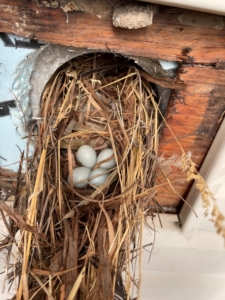
Wiarton Willie told us that spring was going to come early. For birds migrating back to Ontario, this means one thing, it is time to find a nesting place.
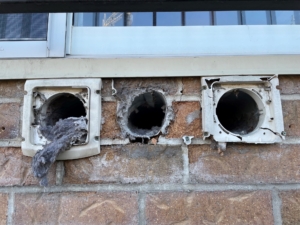
As we all know eager nesters seek refuge for their soon-to-come hatchings in safe, sheltered areas. Dryer vent caps, stove exhausts, and air exchange vents are ideal locations because they are warm and sheltered from predators. A faulty or damaged vent cap or missing louvers can increase the odds you will have a new family member.
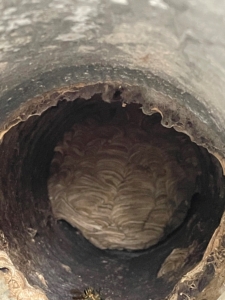
As birds begin building nests, they pull nesting debris back up in vent lines clogging the exhaust’s path. Clogged lines for dryers can cause lint to build up back in the system and eventually into the dryer itself, potentially leading to a FIRE HAZARD.
Not only can it pose a fire risk, but partially clogged dryer vents can also result in excess energy usage. Noting, the average load of laundry will exhaust 1.5 to 2.2 liters of water before its drying cycle is complete. Inefficiencies can drive monthly utility expenses up an additional $25 to $35 per month.
If you have been noticing moldy smells coming from the dryer, bathroom or stovetop exhausts chances are the root cause could be clogging in the line. As birds and rodents nest, inherently, they also continually deposit their droppings in the vent line causing unpleasant odors and health issues. Potentially leading to the infestation of mites.
Though exhaust can pose a health and safety risk, it’s extremely important to acknowledge it is preventable and issues can be addressed relatively inexpensively. Having exterior vent caps and exhaust vent lines professionally inspected, repaired, or cleaned regularly can prevent these potential risks. It’s key to restore optimal velocity in airflow, ensure integrity in the exhaust structure, and the proper operation of exterior vent caps.
As the spring season continues to evolve, consider investing in the maintenance and optimal performance of exhaust venting. A couple of simple tips for Property Mangers to check off their maintenance list:
Walk the property site completing a visual inspection of the exterior vent caps. Looking for nesting debris in the caps and/or damaged caps, missing flaps.
Speak to each board member individually to ask about their individual dryers’ drying time. It should be less than 55 minutes on a regular load free of moldy smells or overheating.
Review the property’s dryer vent line maintenance cleaning plan. When was the last execution date and what was the plan? Noting the Ontario Fire Marshall’s office recommends annual cleaning for everyone.
Be proactive. A simple inspection and diagnosis from a trained professional could save owners money and KEEP them SAFE!
Together, Let’s Get the Lint Out.
Patrick Stradiotto, Owner Dryer Vent Wizard
https://cci-grc.ca/wp-content/uploads/2023/09/Blog-Titles-CCI-17.png9002250adminCCIhttps://cci-grc.ca/wp-content/uploads/2023/09/CCI-Full-Logo-Grand-River-31ae3da81a2928943167b28ecdb52b1f-300x103.jpgadminCCI2023-09-17 18:23:342023-09-17 18:23:51Do Dryers and Other Home Exhaust Vents Pose a Health and Safety Risk?
By a show of hands, how many of us have ignored a simple repair, only for it to become a large, complicated pain later on?
Whether it was a case of not having enough time, or not knowing whose responsibility the repair fell under, one ignored repair can oftentimes turn into a stack of pricey problems.
So, how do we avoid the “should, coulda, wouldas” of condominium repairs? Oftentimes, it’s beneficial to retrace our steps and go back to the root of the problem.
Understanding Core Responsibilities
Whether condominium manager, unit owner, or building owner, it’s important to understand each other’s core responsibilities. Concerned if a leaky pipe is yours to fix? Make sure your board is aware of all issues as soon (or as close to) as they occur, and that professional advice is sought after right from the get-go.
Know Your Condominium Resources
When was the last time there was a scheduled general walk-through? Is there a contractor that your condominium typically uses? Having regularly scheduled walk-throughs and communicating the appropriate dates with all parties is crucial to building a community of trust. Organize regular check-ins within your condominium community to nurture an environment where hiding, or downplaying a repair issue becomes a seldom habit.
Don’t Ignore the Small Stuff
It’s tempting. A small crack here, one leaky faucet there. It won’t hurt anyone, right? Unfortunately, this is something we are all guilty of. Don’t put off tomorrow, what you can do today. It’s never a good feeling when you walk into a problem, knowing that if it had been handled earlier, it wouldn’t be running up your financial bill as high as it is now.
Hearing the word “repairs” shouldn’t send your body into a shockwave. If you backtrack to the root of what derailed a complicated repair issue, it can typically be summed up into those three parts: not understanding core responsibilities, being unaware of crucial resources, and ignoring the “small” stuff until it explodes in your face.
Cultivate your community, and always remember to reach out to your condominium board for any support or advice you may need.
Maggie Matian Marketing Manager for CCI Grand River
https://cci-grc.ca/wp-content/uploads/2023/09/Blog-Titles-CCI-7.png300750adminCCIhttps://cci-grc.ca/wp-content/uploads/2023/09/CCI-Full-Logo-Grand-River-31ae3da81a2928943167b28ecdb52b1f-300x103.jpgadminCCI2023-09-17 18:17:502023-09-17 18:18:09The “Shoulda, Coulda, Wouldas” of Condominium Repairs


 On the flip side, you may be the incoming condominium manager who is taking over a contract. Do you know what to ask for in advance? What to ask for at the deadline? How do you make the transition as seamless as possible for the residents?
  missed.




 Here are some important considerations to add to your next Board meeting agenda to ensure your condo property will provide enjoyment and pleasure for unit owners: